


ACIC 2015 has finally drawn to a close.
This season, we faced a huge issue regarding our attendance. Wildcards, being a social cheerleading team, has members from all walks of life. Different stages of life mean our members have different levels of commitments, and different schedules. We had very little opportunities to have the full squad of 24 together (less than 15 times maybe)? Nonetheless, I am very happy that we managed to achieve our objective of beating our previous season's score!
*Personally, I would like to address the issue of ''playing it safe''. I use the approach which has earned us our 6th gold medal since 2010 and what has worked for us is simply: Stability over difficulty.
Of course, what has worked for us may/may not work for others so do use your discretion.
Our approach of ''playing it safe'' has its risks. One may argue that we can achieve a winning + All Stunts Up (ASU) routine simply by executing simple stunts (eg: elevator pops). I disagree. While doing simple stunts may achieve an ASU, it may not benefit you if other competitors are doing bigger stunts with similar stability.
So the next question is, what is the ideal Difficulty-Stability (DS) matrix such that you can score high enough to win, but not low enough to fall behind?
#DS matrix = Difficulty x Stability
Kentucky Head Coach Jomo Thompson once shared with me that he likes to make a winning routine look easy. In my own context, I like to think that a routine should be comfortable to look at in the eyes of the lay-man. Your routine should captivate the crowd without making them worry if your next stunt is going to drop.
In our case, I chose 8 toss cupies over 8 single rewinds because the DS matrix was higher. 8 single rewinds are impressive on paper but we were not able to execute it to the point where it ''looked easy''in reality. Where a stunt does not ''look easy'', the DS matrix is likely to be lower. Where the DS matrix is lower, there is a high chance that the judges may score you lower.
So for example:
a) Rewinds: Difficulty level = 9/10. Stability level = 6/10. DS Matrix = 9*6/100 = 54/100
b) Toss cupie: Difficulty level = 7/10. Stability level = 8/10. DS Matrix = 56/100.
To conclude, I prefer routines with a higher DS matrix, giving a preference to stability, and not routines that may score higher on paper alone. The upside to this approach gives you a better reward-risk return. The downside to this approach is that routines who bet significantly higher on difficulty may still potentially win even with a lower stability. After all, DS Matrix is a multiplication equation. Difficulty and Stability still take two hands to clap.

*Disclaimer: The writer of this article is writing at his personal capacity. His views do not represent that of Wildcards Cheerleading Team.
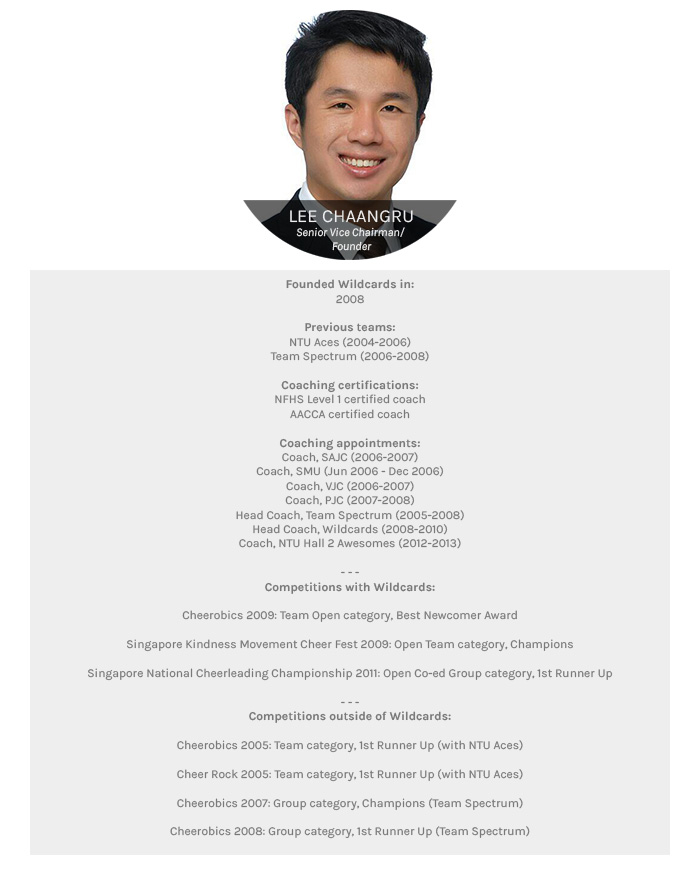
#DS Matrix is a theory coined by the writer and may not be representative of all competitive cheerleading routines. Readers are advised to exercise their own discretion.
No comments:
Post a Comment